
Property Research Topic
Thailand Property Ownership
Understand the main ownership and land-use structures before asking a qualified Thai lawyer to review the exact title and contract.
Useful questions, comparisons, examples and next-step checks around Thailand Property Ownership.

Questions & Answers
Answers About Thailand Property Ownership
These answers organise the topic into practical checks, comparisons and useful research notes.
Condo ownership is often the simplest path for foreigners because you buy a unit rather than land. If the building has available foreign‑ownership quota and the condo is properly registered, you can own it freehold and transfer title at signing. However, you should check the total foreign share allowed in the building, the juristic‑person rules, and any restrictions around rentals, long stays, or use of facilities. Also verify that funds and foreign‑exchan…
2026-10-05 What protections exist if the condo's rules or quotas change?Condominium ownership by foreigners relies on the building’s prescribed foreign-ownership quota, plus the juristic person’s rules and Thai law. If the building changes its quota status or adopts new by-laws that affect foreign-ownership, the buyer’s protection rests on several guardrails. First, obtain written confirmation that your chosen unit is within an available quota before signing. Second, review the condo’s legal documents: the by-laws, the common-…
2026-09-30 Is buying a condominium the simplest foreign-ownership path?Yes, foreigners can generally own a qualifying condominium unit freehold if the building is properly registered under the Condominium Act and there is available foreign-ownership quota. This route can be simpler than owning land or a villa because it provides unit-level title and a built-in owners’ community, but you must verify several details: the building’s foreign-ownership quota status, the juristic person's governance and the building's rules, common…
 4 Q&A
Thailife Residences — Sponsored
4 Q&A
Thailife Residences — Sponsored
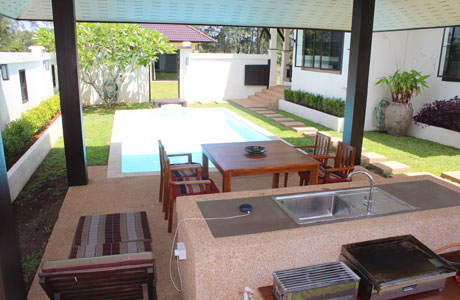 3 Q&A
Thailife Beach House — Sponsored
3 Q&A
Thailife Beach House — Sponsored
 37 Q&A
Khao Lak Areas & Neighbourhoods
37 Q&A
Khao Lak Areas & Neighbourhoods
 33 Q&A
Due Diligence & Contracts
33 Q&A
Due Diligence & Contracts
 22 Q&A
Costs, Taxes & Ongoing Budget
22 Q&A
Costs, Taxes & Ongoing Budget
Ask the seller or developer for the quota certificate and the latest copy of the juristic-person documents. Have an independent Thai lawyer review the quota status, the building’s registration, and the condo rules to confirm the quota is available and applicable to your situation. Check that funds and foreign-exchange evidence meet legal requirements and that the contract clearly states your freehold rights and any rental or sub-letting restrictions. Confi…
2026-09-25 What is the simplest path to long-term villa ownership for foreigners?Foreign ownership is restricted, so the simplest path to a long-term villa is usually through one of the structures that are legally eligible for foreigners. A qualifying condominium unit in a properly registered building with available foreign-ownership quota can be owned freehold by a foreigner, subject to funds evidence and building rules. If you want a villa or house on land, foreigners typically use a long-term land lease with a registered right such …
2026-09-20 Which ownership structure is most common for foreigners in practice?Most foreigners separate ownership of the building from the land. Common options include owning a building on land via a registered land lease or a right of superficies (building on land owned by someone else), or buying a condo unit under the Condominium Act if available. The exact approach depends on the property title, long-term plans, and risk tolerance. It’s essential to have a Thai lawyer draft and review the structure in writing before signing. Do n…
 32 Q&A
Property Inspection & Coastal Risks
32 Q&A
Property Inspection & Coastal Risks
 26 Q&A
Building & Renovating in Khao Lak
26 Q&A
Building & Renovating in Khao Lak
 27 Q&A
Tropical Property Maintenance
27 Q&A
Tropical Property Maintenance
 32 Q&A
Rental & Investment
32 Q&A
Rental & Investment
 28 Q&A
Smart Living & Utilities
28 Q&A
Smart Living & Utilities
Check the condo’s quota certificate and the juristic person’s records, then have a Thai lawyer verify that the project’s foreign-ownership quota is not exhausted and that the building’s rules and title allow freehold ownership for your unit. The seller or developer should provide the quota certificate and the unit’s registration details. Confirm common fees, sinking fund and any restrictions in the by-laws, and review these items with an independent lawyer…
2026-09-10 How can I verify the condo's foreign-ownership quota and the building's rules?Verify begins with the quota certificate and the unit’s title deed, then review the juristic person, condo rules and the management plan. Check common fees, the sinking fund balance, and any planned levies or repairs. Read the building's rules to confirm limits on short stays, pets, and rental arrangements to ensure they fit your plans. Have an independent Thai lawyer review all transfer and condo agreements, and confirm that funds and foreign-exchange req…
2026-09-08 What should I verify about condo ownership limits and quotas?A foreigner can generally own a qualifying condo unit freehold if the building is properly registered under the Condominium Act and the foreign-ownership quota is available. You may need to show funds and foreign-exchange evidence. This route does not automatically apply to villas or non-condo buildings. Before purchasing, verify who owns the juristic person and that the quota certificate exists, and review the building’s common-fee structure, sinking fund…
 16 Q&A
Remote Ownership
16 Q&A
Remote Ownership
 28 Q&A
Retirement, Relocation & Daily Life
28 Q&A
Retirement, Relocation & Daily Life
 43 Q&A
Property Types & Buyer Planning
43 Q&A
Property Types & Buyer Planning
 22 Q&A
Wellness & Lifestyle Property
22 Q&A
Wellness & Lifestyle Property
Leases can grant long-term use of land but may carry renewal uncertainties and dependence on the lessor. A registered usufruct gives you the right to use and benefit from the land, but ownership remains with the titleholder and enforcement depends on registration. A Thai-registered company can own land in specific circumstances, yet this adds corporate governance, accounting, and regulatory complexity and may not suit personal living arrangements. None of …
2026-09-01 What steps should I take to set up a legal ownership structure for foreigners?First clarifty what you will own: the building only, or the land as well. In many cases foreigners own a building on land they lease or hold a registered right of superficies. The key is to have the arrangement properly drafted, registered and consistent with documents like title, permits and sale agreements. Do not assume that paying for a house proves ownership of the structure. Engage an independent Thai lawyer (and, if relevant, an accountant) to revie…
2026-08-31 What documents verify the foreign-ownership quota and building rules?Key documents include the condo's foreign-ownership quota certificate and the juristic person's information, the building's title or registration evidence, and the current condo rules/by-laws. Request copies of the quorum or committee minutes if available, and confirmation of common fees and sinking fund. Verify that the unit is legally registered under the Condominium Act and that the foreign ownership quota remains available at the time of purchase. Revi…
Visual Examples
Images That Support Thailand Property Ownership
A small visual sample connected to this topic.
Visual Example
Generated editorial image for Leasehold Ownership: a clear consultation scene ab…
 outdoor living
Generated editorial image for Beach-House Ownership: owners enjoying coffee on a…
outdoor living
Generated editorial image for Beach-House Ownership: owners enjoying coffee on a…
 pool
Generated editorial image for Total Ownership Costs: a planning scene covering h…
pool
Generated editorial image for Total Ownership Costs: a planning scene covering h…
 property lifestyle
Generated editorial image for Building Ownership: a professional discussion sepa…
property lifestyle
Generated editorial image for Building Ownership: a professional discussion sepa…
 property guidance
Generated editorial image for Freehold Condominium Ownership: a buyer examining …
property guidance
Generated editorial image for Freehold Condominium Ownership: a buyer examining …