
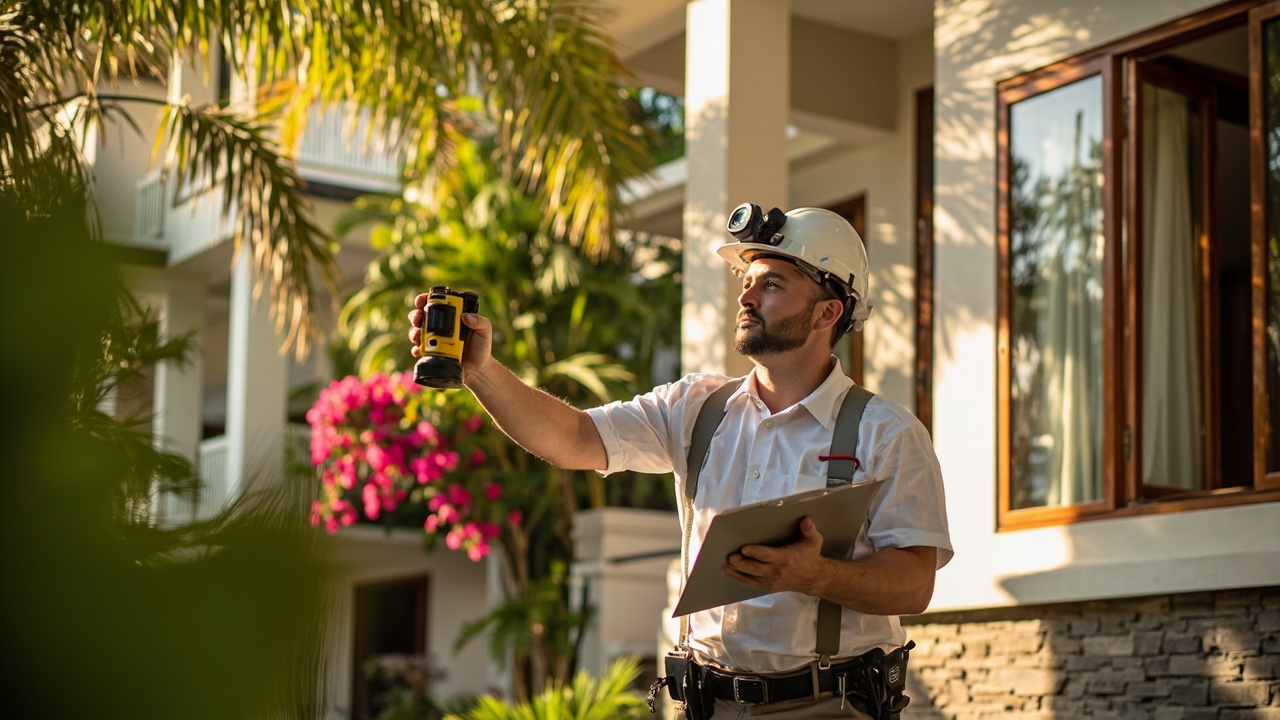
A puddle on its own does not establish the scale of a drainage problem. Look at where it forms, how close it is to the house, whether it collects against walls or thresholds, and whether water has a clear route to a drain or outlet. Check for damp patches, eroded soil, washed-out landscaping, staining, or water entering low areas. Note whether roads or neighbouring plots send runoff toward the property, and ask nearby residents whether ponding is a recurring issue after heavy rain. If the concern remains, ask an independent inspector to document site levels, surface falls, drainage outlets and observed water paths. Photographs taken during or just after rainfall can help, but they should be considered alongside a written assessment and local history. Do not assume a single dry inspection—or a quick fix to visible landscaping—proves the site performs well in monsoon conditions. Have a qualified professional assess the specific property before relying on a conclusion.
Public Property Q&A
If Water Ponds on or Beside the Plot after Rain, How Can I Tell Whether It Is a Serious Problem?
Continue the conversation
Useful next steps
Use this answer as a practical starting point. Current prices and availability should be confirmed with the relevant seller, developer or manager, while ownership, contracts, tax and inspection matters should be checked with qualified buyer-side professionals.
Related Topics
More Property Inspection & Coastal Risks Topic Pages
Explore more topic pages connected to this answer.



Related Visual Examples
A short visual sample connected to this answer or its topic.
 living roomGenerated editorial image for Living Rooms: a comfortable modern tropical living room with natural t…
 coastal lifestyleGenerated editorial image for Townhouses: a neat row of modern tropical townhouses near Khao Lak tow…
 bedroomGenerated editorial image for Five-Bedroom Luxury Villas: a large refined Khao Lak estate with guest…
 coastal lifestyleGenerated editorial image for Beach Houses: a refined coastal house with breezy veranda, palms and c…